
Skala de la Ville & ramparts
Walk the walls for Atlantic views and the city’s iconic cannon platforms — the image most travellers come for.
UNESCO World Heritage · Visitor guide
History, souks & Atlantic light — 10 minutes from the villas
A calm, car-free medina of whitewashed lanes, blue shutters, and ocean wind — easier to explore than many Moroccan cities, and rich with artisan workshops.
Use it as a practical briefing before you leave Villa Talya or Villa Arena: what the medina is, how it grew, which markets matter, and what is worth buying — so your time inside the walls feels clear, not rushed.
Curated for Stay Essaouira guests · local visitor notes
Mogador
Understanding a little history makes every rampart, gate, and workshop more meaningful — and helps you navigate with confidence.
Quick facts for visitors
Long before the name Essaouira, this Atlantic harbour was known as Mogador. Berber and Portuguese presence shaped early trade; in the 1760s, Sultan Sidi Mohammed ben Abdallah commissioned a new fortified port city to open Morocco to Atlantic commerce. European military engineers — notably Théodore Cornut — helped draw the grid of streets still felt today: ordered blocks, wide-enough lanes for the wind, and ramparts facing the ocean.
The result is unusual among Moroccan medinas: more open, more breezy, and easier to walk without getting lost. Inside the walls you move between the Skala (fortified platforms with cannons), the working fishing port, Jewish and Muslim quarters of memory, and artisan streets where wood, metal, and leather still define the local economy.
UNESCO listed the Medina of Essaouira as a World Heritage site for this blend of European-planned fortifications and Moroccan living culture. For visitors, that means a historic city that still works — fishermen at dawn, workshops by day, music and cafés when the light softens.
A simple loop covers the soul of Essaouira without exhausting your day — ramparts, harbour, then the market streets.
Walk the walls for Atlantic views and the city’s iconic cannon platforms — the image most travellers come for.
A living harbour of blue boats and grilled seafood. Ideal for lunch before diving into the souks.
The main square linking medina and ocean edge — cafés, people-watching, and easy orientation.
Workshops for thuya wood, silver, leather and textiles sit along pedestrian arteries — follow the scent of polished wood and spice.
Essaouira’s markets are compact, walkable, and less overwhelming than larger inland medinas.
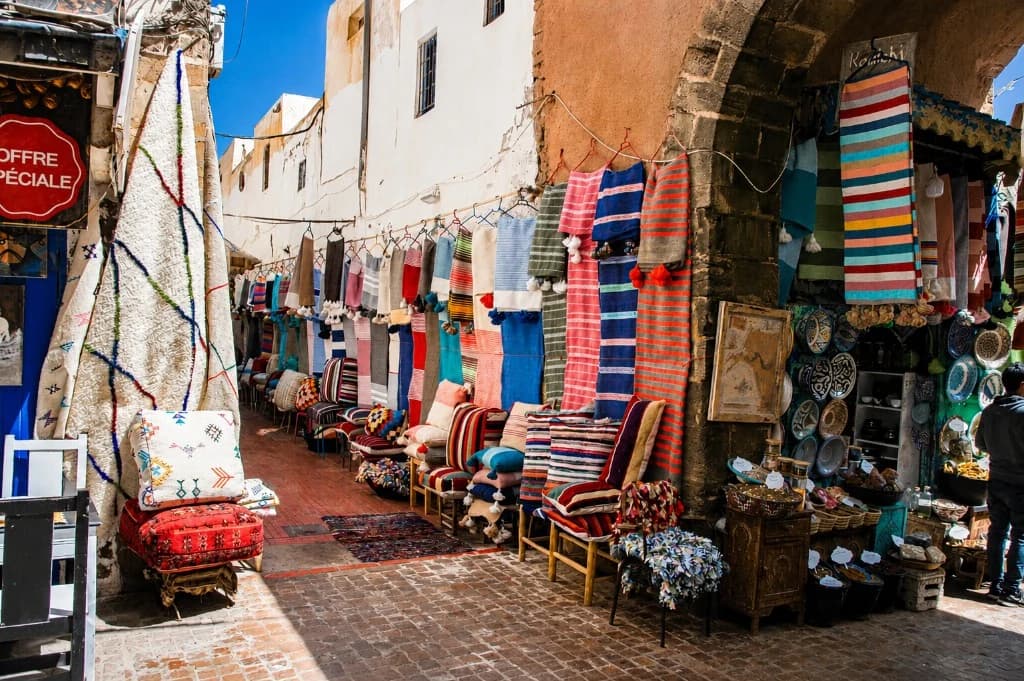
Expect clustered streets rather than one giant covered bazaar: spice corners, wood workshops, silver and jewellery lanes, textile stalls, and leather goods. Many artisans work in open ateliers — you can watch marquetry, polishing, and stitching. Prices are rarely fixed for souvenirs; polite bargaining is normal. Morning light is cooler for walking; late afternoon is atmospheric for photos. If you prefer quiet browsing, avoid peak cruise-ship hours when possible.
The souvenirs travellers actually take home — and how to choose well.
Locals and returning visitors keep pointing to the same craft specialties. Prioritise quality and origin over volume: one beautiful piece beats a bag of rushed buys.
عرعار · thuja
Essaouira’s signature craft: fragrant thuya (arar) wood boxes, trays, chess sets and marquetry. Look for fine inlay, smooth finish, and workshops where you can see the work.
Tip — Smell the wood and check joints — quality pieces feel dense and carefully finished.
أركان
Culinary and cosmetic argan are among the most requested purchases. Prefer sealed, labelled bottles from cooperatives or trusted shops over unmarked street deals.
Tip — Ask whether it is food-grade or beauty-grade — they are not the same product.
جلد · cuir
Bags, poufs, belts and slippers (babouches) in soft Moroccan leather. Essaouira’s pieces are often lighter and more travel-friendly than heavy inland markets.
Tip — Flex the leather and check stitching; unfinished edges and strong chemical smell are warning signs.
توابل · bazar
Ras el hanout, cumin, saffron blends, mint, and dried herbs fill colourful stalls. Great edible gifts if packed well for the flight home.
Tip — Buy sealed or tightly wrapped; label contents so airport security and customs stay simple.
فضة
Berber-inspired silver, filigree and beads remain popular. Compare weight and clasp quality across two or three shops before deciding.
Tip — If a price seems too good for “pure silver”, assume mixed metal unless proven otherwise.
منسوجات
Scarves, blankets, and small woven pieces travel easily. Pair with a thuya box or argan tin for a complete Essaouira gift set.
Tip — Check colour fastness on scarves if you plan to wash them often.
Start politely below the asked price, smile, and be ready to walk away. Buying from the maker’s workshop often feels fairer than middle stalls — and supports the craft you came to see.
Designed for guests who want history, shopping, and still make it back for the pool.
Drive from the villa (~10 min), park near a main gate, walk the Skala, then Place Moulay Hassan for coffee and a map of the morning.
Grilled fish by the harbour — fuel before the souks, with ocean air and fewer indoor crowds.
Thuya workshops, argan, leather, then spices if you still have space. One focused purchase list beats wandering exhausted.
Small details that save time and keep the visit enjoyable.
The medina is mostly pedestrian. Park outside the walls and continue on foot with flat, comfortable shoes.
Small notes help in workshops. Mornings are cooler; wind on the ramparts can be strong — bring a light layer.
You do not need every street. Prioritise ramparts → port → one shopping focus (wood or argan or leather).
Need flexible day trips beyond a single taxi? You can hire cars. For dunes and argan forest after the medina, some guests add a short quad outing.
Stay Essaouira’s Villa Talya and Villa Arena offer exclusive-use stays with private pools and countryside quiet, while the UNESCO Medina stays an easy morning or afternoon away. Book direct for the best rate and concierge help with your day plan.
Yes. The Medina of Essaouira is inscribed on the UNESCO World Heritage List for its Atlantic fortified port city and living cultural landscape.
Explore Mogador’s medina with a clear plan — then return to olive-grove quiet at Villa Talya or Villa Arena.